
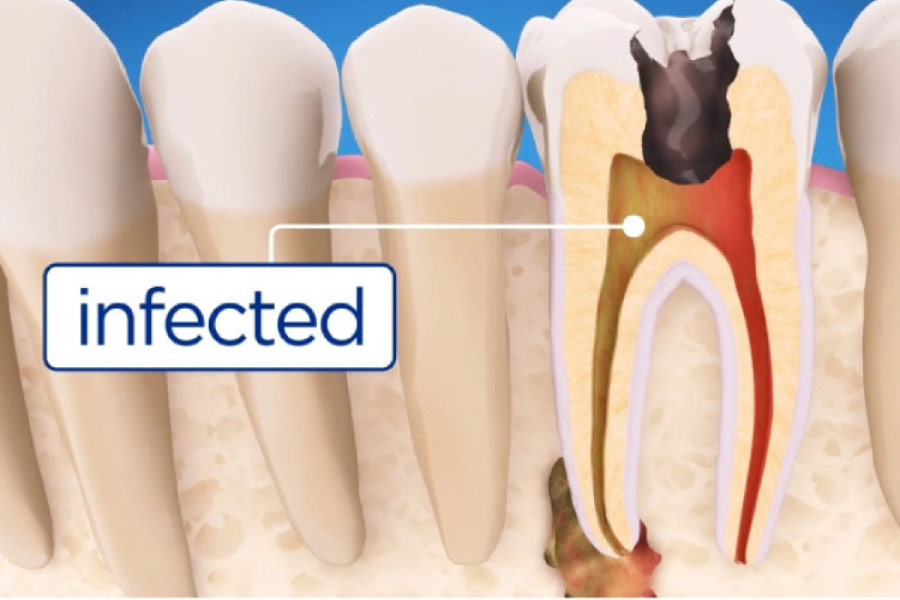
Hearing that you may need a root canal can make some patients feel uneasy, but modern treatment is highly effective, routine, and far more comfortable than its reputation suggests. A root canal is designed to relieve pain, eliminate infection, and preserve your natural tooth whenever possible.
With today’s dental techniques and local anesthesia, the procedure is typically straightforward and focused on restoring oral health while preventing further complications.
What Is a Root Canal?
A root canal is a dental procedure used to treat infection or damage inside a tooth. At the center of each tooth is the pulp, which contains nerves and blood vessels that help the tooth develop. When bacteria enter the pulp due to deep decay, a crack, or trauma, an infection can occur.
If left untreated, this infection may spread and lead to severe pain, swelling, abscess formation, and even tooth loss. A root canal removes the infected tissue, cleans and disinfects the inner canals of the tooth, and seals it to prevent reinfection.
Signs You May Need a Root Canal
Some infected teeth cause clear symptoms, while others are only identified during routine dental exams. Recognizing early warning signs can help prevent more serious problems.
Common symptoms include persistent tooth pain, sensitivity to hot or cold, swelling or tenderness in the gums, discomfort when biting or chewing, and tooth discoloration. In some cases, there may be swelling around the affected area or a pimple-like bump on the gums.
However, not all infections are painful, which is why regular dental checkups are essential for early detection and treatment.
What Happens Before Treatment?
Before recommending a root canal, your dentist will examine the tooth and may take X-rays to assess the extent of the infection. This helps determine whether root canal therapy is the best option.
Your dentist will explain the findings, discuss the procedure in detail, and answer any questions. This ensures you understand what to expect and feel prepared for treatment.
What Happens During a Root Canal?
A root canal is often similar to having a standard filling comfort-wise.
Numbing the Area
Local anesthesia is used to numb the tooth and surrounding area. This ensures you remain comfortable throughout the procedure.
Cleaning the Tooth
Once numb, the dentist creates a small opening in the tooth to access the infected pulp. The damaged tissue is carefully removed, and the inside of the tooth is thoroughly cleaned and disinfected using specialized instruments.
Sealing and Restoration
After cleaning, the space inside the tooth is filled and sealed to prevent future infection. In many cases, a dental crown is placed later to restore strength and protect the tooth from further damage.
What to Expect After a Root Canal
One of the main benefits of a root canal is that it eliminates the source of infection and often provides immediate relief from tooth pain.
Mild tenderness or sensitivity for a few days after treatment is normal and can typically be managed with over-the-counter pain relief. It is also recommended to eat soft foods, avoid chewing on the treated tooth until it is fully restored, and maintain good oral hygiene.
Most patients recover quickly and return to normal activities within a short period. However, if you experience severe pain, swelling that worsens, or symptoms that do not improve, you should contact your dentist promptly.
Why Timely Treatment Matters
Delaying a root canal can allow infection to spread, potentially leading to more complex treatment or tooth loss. In contrast, timely treatment preserves your natural tooth and helps maintain long-term oral health.
Modern root canal therapy is highly successful and designed to be as comfortable as possible. If you are experiencing tooth pain or sensitivity, seeking prompt evaluation can help prevent complications and protect your smile for the future.